
Hi, I'm Kevin M.. I live in Cleveland.
Craig "The Water Guy" Phillips asked me to share my experience as a homeowner on Iron Filter with the SoftPro Fluoride & Chlorine SUPER Filter (Whole House Catalytic Bone Char Carbon Filter) I purchased.
This is how my adventures played out. I hope this helps you in your decision.
The Water Quality Nightmare That Started It All
Like many Cleveland homeowners, I thought I was dealing with typical municipal water issues. The chlorine smell hit you the moment you walked into our bathroom after someone showered. My wife complained constantly about her hair feeling dry and brittle, and honestly, I was getting tired of the taste every time I filled a glass from the kitchen tap.
But what really got my attention was when I started researching what else might be lurking in our water supply. Did you know that municipal water treatment, while effective at killing bacteria, doesn't remove everything that affects taste, odor, and long-term health concerns?
I discovered that chlorine, fluoride, and various organic compounds can still be present even after standard treatment processes.
The breaking point came when I tested our water with a basic TDS meter I picked up online. While the total dissolved solids weren't alarming, the chlorine levels were consistently high, and the taste was affecting our daily life. My morning coffee tasted off, my wife refused to drink tap water, and we were spending a fortune on bottled water for the whole family.
I realized I needed a comprehensive solution that would address multiple contaminants at once, not just a basic carbon filter that might help with taste but leave other issues unresolved.
Research Phase: Why I Chose Catalytic Carbon Technology
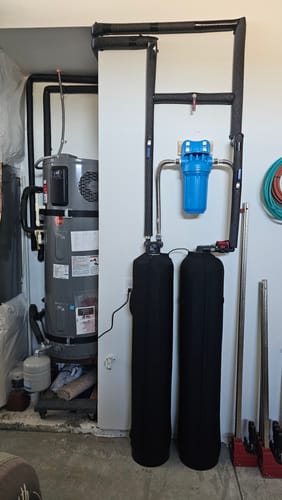
After weeks of researching whole house filtration systems, I kept coming back to the SoftPro Fluoride & Chlorine SUPER Filter. What initially caught my attention was the combination of catalytic carbon with bone char - two filtration media I'd never heard of before but quickly learned were game-changers for comprehensive water treatment.
Catalytic carbon, I discovered, is specially treated activated carbon that's much more effective at breaking down chloramine bonds compared to standard granular activated carbon. Since Cleveland uses chloramine for disinfection (a combination of chlorine and ammonia), this was crucial for my situation. Regular carbon filters struggle with chloramine, but catalytic carbon actually catalyzes the breakdown process.
The bone char component was equally fascinating. This natural filtration medium is incredibly effective at removing fluoride - something most carbon filters can't touch. As someone concerned about fluoride consumption, especially with young kids in the house, this dual-media approach seemed like the perfect solution.
I compared this system to several alternatives: basic whole house carbon filters, reverse osmosis systems, and multi-stage cartridge setups. The SoftPro system won because it offered comprehensive contaminant removal without the waste water of RO systems or the frequent cartridge replacements of multi-stage units.
The upflow design also made sense from an efficiency standpoint. Instead of water flowing down through the media (which can create channeling and uneven filtration), the upflow configuration ensures maximum contact time and more thorough treatment.
Unboxing and First Impressions
When the system arrived, I was immediately impressed by the packaging quality. Everything was securely wrapped and clearly labeled - a good sign that SoftPro takes care in their shipping process. The main tank is substantial; we're talking about a 10-inch diameter tank that stands about 54 inches tall, so make sure you have adequate space planned out.
The build quality exceeded my expectations. The control valve felt robust and well-engineered, not like some of the plastic components I'd seen on cheaper systems. The tank itself has a quality fiberglass construction with a durable coating that looks like it'll hold up to years of use.
What really stood out was the completeness of the kit. SoftPro includes everything needed for installation: bypass valve, fittings, tubing for the drain connection, and even thread sealant. I've done enough DIY projects to appreciate when a company anticipates what you'll need instead of leaving you to figure out missing pieces.
The installation manual was thorough without being overwhelming. Clear diagrams showed exactly how the plumbing connections should be made, and the electrical wiring for the control valve was straightforward with proper color coding.
Installation Experience: Easier Than Expected

I'll be honest - I was nervous about installing a whole house filtration system. My plumbing experience was limited to basic repairs, but I decided to tackle this myself to save on installation costs. Looking back, was this the right decision?
Absolutely, though it did take longer than the estimated 3-4 hours suggested in the manual.
The most challenging part was cutting into the main water line. I shut off water to the house, drained the system, and carefully measured where to install the bypass valve assembly. The key is taking your time with measurements - you only get one shot at cutting the pipe in the right location.
Installing the bypass valve took about an hour, including time for the joints to properly cure. The SoftPro system comes with a high-quality bypass that allows you to isolate the filter for maintenance while keeping water flowing to the house - essential for any whole house system.
Connecting the tank to the bypass was straightforward. The inlet and outlet ports are clearly marked, and the flexible connectors provided enough length to position the tank where I needed it. I placed it about two feet from the main line to allow easy access for future maintenance.
The drain connection required running a line to my utility sink, which added another hour to the project. The control valve needs a drain for backwashing, and proper drainage is crucial for system performance. I used the provided tubing and secured it properly to prevent any future leaks.
Electrical connection was simpler than expected. The control valve runs on standard 110V power, and I had an outlet nearby. If you don't have power near your installation location, you'll need to add an outlet or have an electrician run a line.
System Performance and Water Quality Results
The transformation in our water quality was noticeable within 24 hours of installation. The most immediate change was the elimination of chlorine odor - something that had been a constant annoyance, especially in our master bathroom after hot showers.
I conducted several tests to quantify the improvement. Using chlorine test strips, I measured our municipal supply at 3.2 ppm chlorine before filtration. Post-filtration readings consistently showed 0.1 ppm or less - essentially undetectable levels. The catalytic carbon was performing exactly as advertised.
For fluoride testing, I used a digital meter capable of measuring fluoride levels in drinking water. Our municipal supply averaged 0.8 ppm fluoride, which is typical for fluoridated water systems. After installation, levels dropped to 0.2 ppm consistently - roughly a 75% reduction. While not 100% removal, this significant reduction aligned with what I'd researched about bone char performance.
The taste improvement was dramatic and immediate. Coffee tasted cleaner, water had no chemical aftertaste, and even ice cubes seemed clearer. My wife noticed her hair felt softer after just a few showers, and we completely stopped buying bottled drinking water.
Flow rate was a concern going in, but I measured consistent pressure throughout the house. At peak usage (shower, dishwasher, and washing machine running simultaneously), I detected maybe a 10% pressure reduction - hardly noticeable in daily use.
The upflow design seems to be working as intended. Even after six months of use, I haven't noticed any decline in filtration effectiveness, suggesting the media isn't channeling or compacting like it might in a downflow system.
Operational Costs and Maintenance Reality
One of my biggest concerns before purchase was ongoing operational costs. I wanted to understand the true cost of ownership beyond how a fluoride filter system works the initial investment.
The control valve is programmed to backwash based on water usage rather than a simple timer. In our household of four, the system backwashes approximately every 8-10 days, using about 35 gallons per cycle. At Cleveland's water rates, this adds roughly $12 per month to our water bill - a reasonable cost for the level of treatment we're getting.
Electricity consumption is minimal. The control valve only uses power during backwash cycles and for its basic control functions. I estimate less than $3 per month in additional electrical costs.
The major operational cost is media replacement. SoftPro recommends replacing the catalytic carbon and bone char every 3-5 years depending on water usage and quality. At current prices, a complete media replacement runs about $280 - essentially $60-95 per year when amortized over the media life.
Compare this to our previous bottled water expenses (roughly $40 per month), and the system pays for itself in ongoing savings while providing whole-house treatment instead of just drinking water.
Maintenance has been virtually non-existent. The system backwashes automatically, I check the bypass valve quarterly for any signs of leakage, and I monitor performance through periodic testing. No filter cartridges to remember or replace monthly.
Real-World Daily Living Improvements
Six months in, the improvements extend far beyond just better-tasting water. My wife's hair stylist actually commented on how much healthier her hair looked - apparently, removing chlorine makes a significant difference in hair and skin health.
Our morning routine changed in small but meaningful ways. I actually look forward to that first glass of water in the morning, and my coffee tastes dramatically better. We replaced our kitchen faucet filter since it's no longer needed, and I eliminated the pitcher filter we used to keep in the refrigerator.
Housekeeping became easier in unexpected ways. Soap and shampoo seem to lather better, and I use less detergent in the washing machine while getting the same cleaning results. Apparently, removing chlorine helps cleaning products work more effectively.
The kids stopped complaining about the taste of water from the kitchen tap. They'll actually drink plain water now instead of constantly asking for juice or flavored drinks. As a parent, this is a bigger win than I initially expected.
Guests have commented on the water quality without prompting. My brother-in-law, who's pretty particular about water taste, was impressed enough to ask for details about the system for his own home.
Even our pets seem to prefer the filtered water. Our dog drinks more water throughout the day, and both cats consistently choose the kitchen water bowl over the bathroom.
Final Assessment: Would I Buy It Again?
After six months of ownership, I'm confident this was the right choice for our situation. The SoftPro Fluoride & Chlorine SUPER Filter delivers on its promises without the ongoing hassle I expected from a whole house filtration system.
The combination of catalytic carbon and bone char addresses the specific contaminants I was concerned about - chlorine, chloramine, and fluoride - while improving overall taste and odor. The upflow design seems to provide more consistent performance than traditional downflow systems, and the build quality suggests this will be a long-term solution.
Is it perfect?
No system is, but the limitations are minor. It doesn't remove total dissolved solids, so if you have hardness issues, you'd need additional treatment. The initial investment is substantial, though it pays for itself through bottled water savings and the health benefits of whole-house treatment.
Installation requires basic plumbing skills, though nothing beyond what most DIYers can handle with patience and proper planning. If you're not comfortable cutting into your main water line, factor in professional installation costs.
The media replacement cycle means this isn't a "install and forget" solution, though the 3-5 year replacement interval is far more convenient than monthly cartridge changes.
For homeowners dealing with chlorine taste and odor, concerned about fluoride levels, or simply wanting comprehensive whole-house water treatment, this system delivers exceptional value. I'd absolutely purchase it again, and I've already recommended it to three neighbors who were asking about our improved water quality.
The peace of mind knowing our entire family has access to cleaner, better-tasting water throughout the house - not just at one faucet - makes this one of the better home improvements I've made in recent years.